Whether we are talking about bakery, viennoiserie or pastry products, everything starts with the making of a dough, each one different from the others. Finished products are now often distinguished by their appearance or by the equipment required for their production, but there is also a real technological distinction: the rheological state of the dough.
The purpose of this article is to provide a simple and practical framework for understanding the different types of dough, in order to better understand their behaviour during processing and secure your industrial choices. This classification is not theoretical: it directly determines the technologies that must be implemented… and therefore the sourcing of the most specialized suppliers.
Hopi consulting is the only engineering consultancy fully specialized in the bakery, viennoiserie, pastry and snacking industry. By focusing exclusively on this sector, we are able to provide concrete industry expertise and guarantee tailor-made solutions dedicated to the world of bakery, viennoiserie and pastry production.
In addition, our global approach covers equipment, utilities and infrastructure, allowing us to share know-how and experience that define our strength and uniqueness. Finally, Hopi Consulting stands out through its complete independence and impartiality in the selection of equipment manufacturers and process suppliers — the only way to guarantee a solution that truly meets your specific needs.

In the bakery, viennoiserie and pastry industry, performance analysis still focuses too often on the finished baked product (appearance, volume or texture), whereas true industrial control begins with the dough itself. Its rheology, elasticity, tenacity, firmness and behavior during moulding directly determine the selection and sizing of all upstream process equipment: mixers, production lines, conveyors, and more.
This is why dough characterization has now become a major strategic challenge for BVP manufacturers seeking to optimize their production tools. These challenges, as well as the solutions available to adapt equipment to the actual behavior of doughs, lead us to present MERAND in this article.
Special thanks to Thierry CLAUSSE and Xavier LE BENOIST from MERAND for their contribution to this article.
Article summary
The purpose of this article is to change the way bakery, viennoiserie and pastry projects are approached by classifying doughs according to their rheology (physical state), rather than focusing solely on the finished product at the end of the production line.
The 3 types of doughs
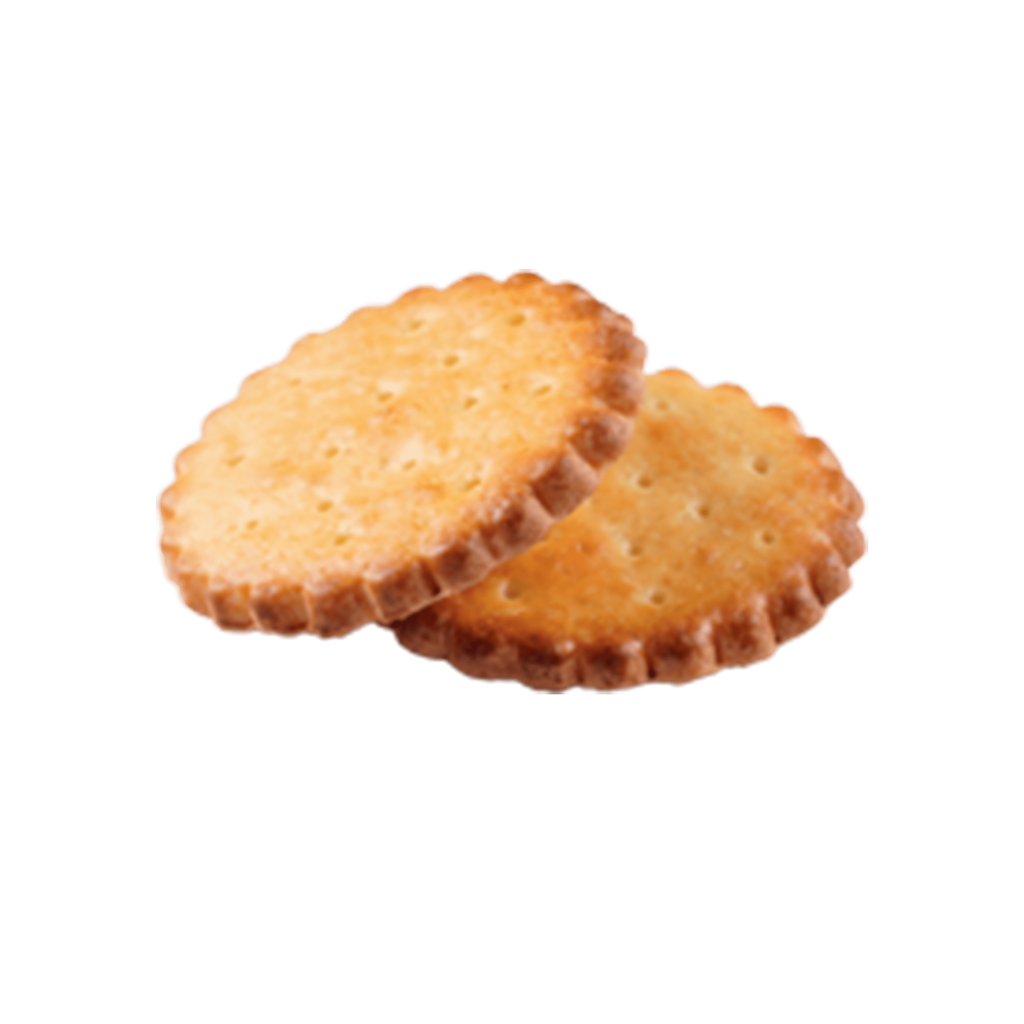
- Stiff doughs: low hydration, crumbly (biscuits)
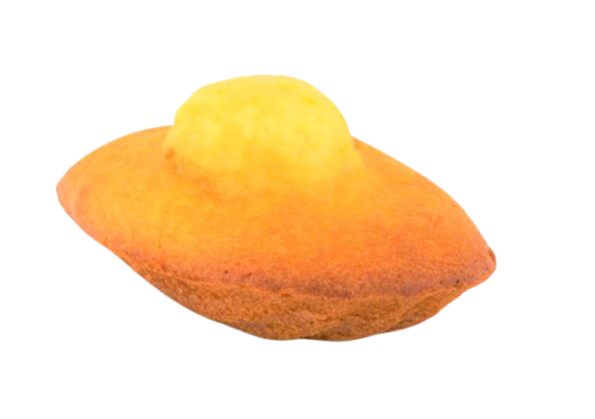
- Liquid batters: highly hydrated, fluid (cakes, choux pastry)
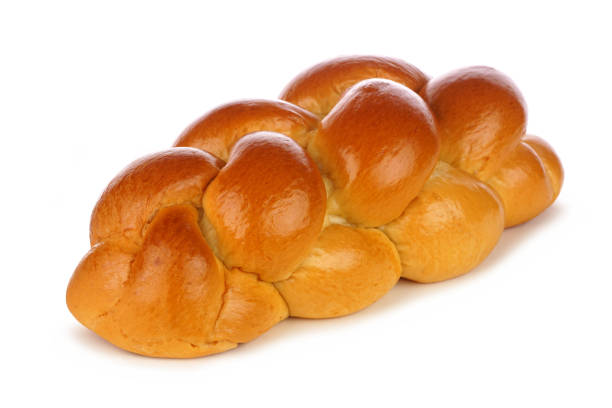
- Soft doughs: intermediate texture (bread, brioche, sourdough)
From these three types of doughs derive different process approaches:
- Stiff doughs → cutting, sheeting, cooling
- Liquid batters → viscosity management, dosing
- Soft doughs → balance between stability, extensibility and fermentation
Our technical opinion
Integrating the dough type at the core of the project requirement definition. For example by:
- Anticipating the constraints related to sticky doughs
- Optimizing the flow and transfer of difficult doughs
- Avoiding the risk of overmixing phenomena
Classify doughs by their rheology, not by the finished products
This classification based on rheological state immediately provides guidance on how to mix, convey, process, divide and shape the dough in an industrial environment.
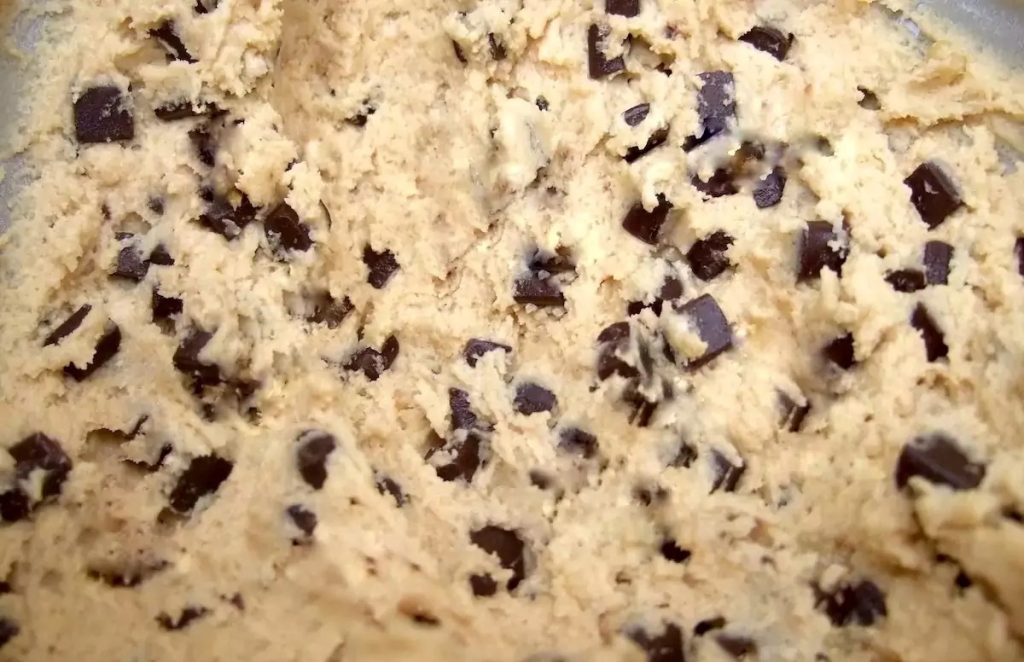
Stiff doughs
Examples of stiff doughs: biscuit doughs or shortcrust pastry doughs
- Low hydration, firm and crumbly texture, with limited internal cohesion.
- Very little structured gluten network, as the objective is not to develop an open crumb, but rather a short, crispy or crunchy texture.
- Process implications:
- processing through agglomeration, sheeting, cutting and die cutting
- high sensitivity to temperature (very rapid softening effect)
- importance of resting and cooling phases between operations
Liquid batters
Examples of liquid batters: sponge cake batters or rich egg-based batters
- High levels of hydration and fat content, often with a high proportion of eggs.
- From a process standpoint, the key is not structural strength before baking, but controlled viscosity:
- fluid enough to be dosed consistently
- free from undissolved particles and lumps
- stable enough to avoid separation and loss of aeration before baking
Soft doughs
BAKERY DOUGHS:
- Temperature, hydration level and consistency vary significantly depending on the intended process.
- A gluten network is formed, capable of retaining fermentation gases.
- Process implications:
- A delicate balance between dough strength, gas retention and behaviour in mechanised production lines.
- A very wide rheological spectrum is possible, ranging from very stiff to very soft doughs:
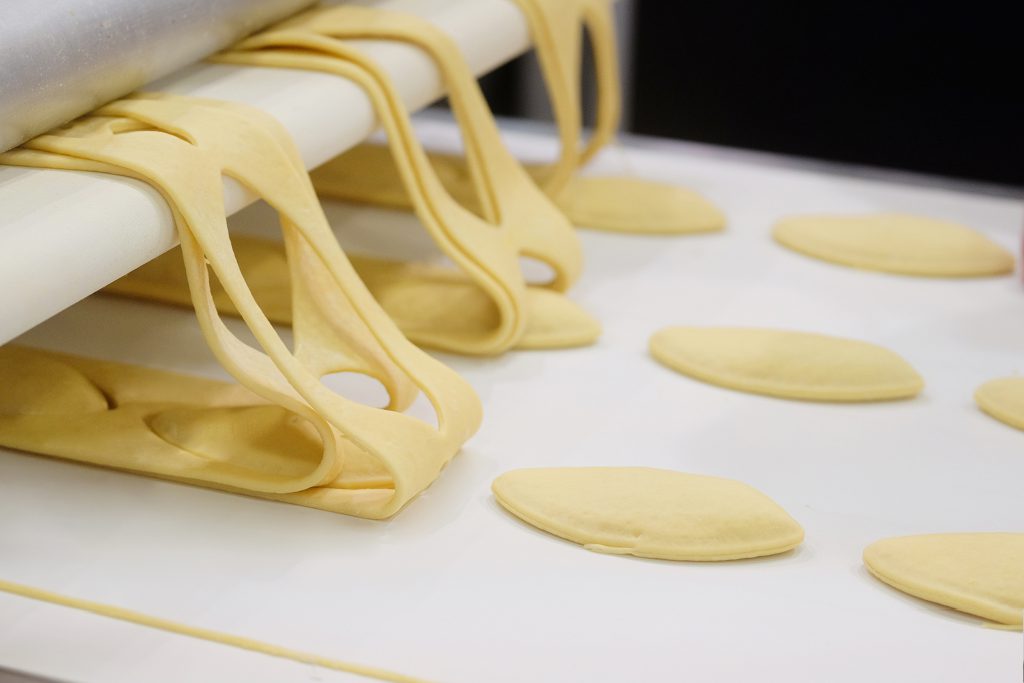
- Very stiff dough: laminated dough base (dough for puff pastry)
- Stiff dough: directly moulded white bread dough
- Soft dough: butter-rich brioche dough
- Very soft dough: hamburger bun dough
VIENNOISERIE DOUGHS:
- Low hydration, firm texture with a strongly developed gluten network.
- Process implications:
- A delicate but essential balance between firmness and extensibility in order to withstand the sheeting and folding operations required for lamination (for more information, see our article on the industrial sheeting process).
LEVAIN, BIGA, SPONGE :
- More or less hydrated pre-ferments, which influence both the final dough rheology (extensibility, consistency) and the product’s aromatic profile (for more information, see our article on sourdoughs).
- These soft doughs are probably the most demanding for mechanised production lines: mixer parameter settings, fermentation environment control, proofing time sizing, transfer system selection, and more.
The three key levers that shape texture
Behind every dough, regardless of the final product, there are three key parameters that drive its structure and rheological behavior:
Hydration level
Water, milk, cream, eggs, liquid fats (oils)…
- The higher the hydration level, the more fluid the dough becomes, but also potentially stickier.
- A variation of just a few percentage points in hydration is enough to significantly change mixing, shaping or dosing conditions.
Gluten network development
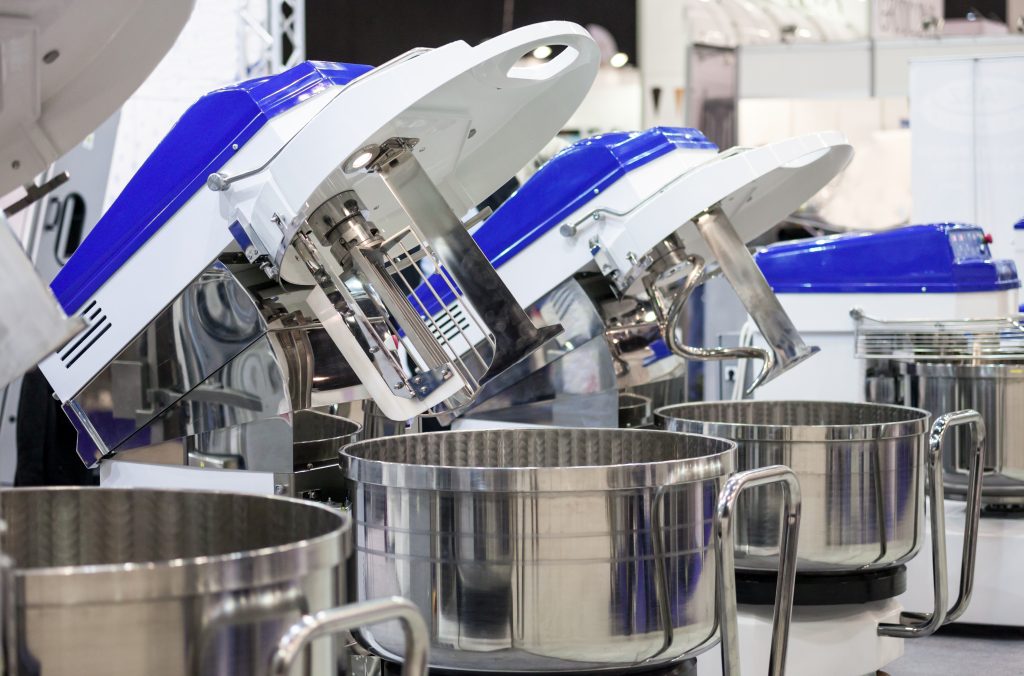
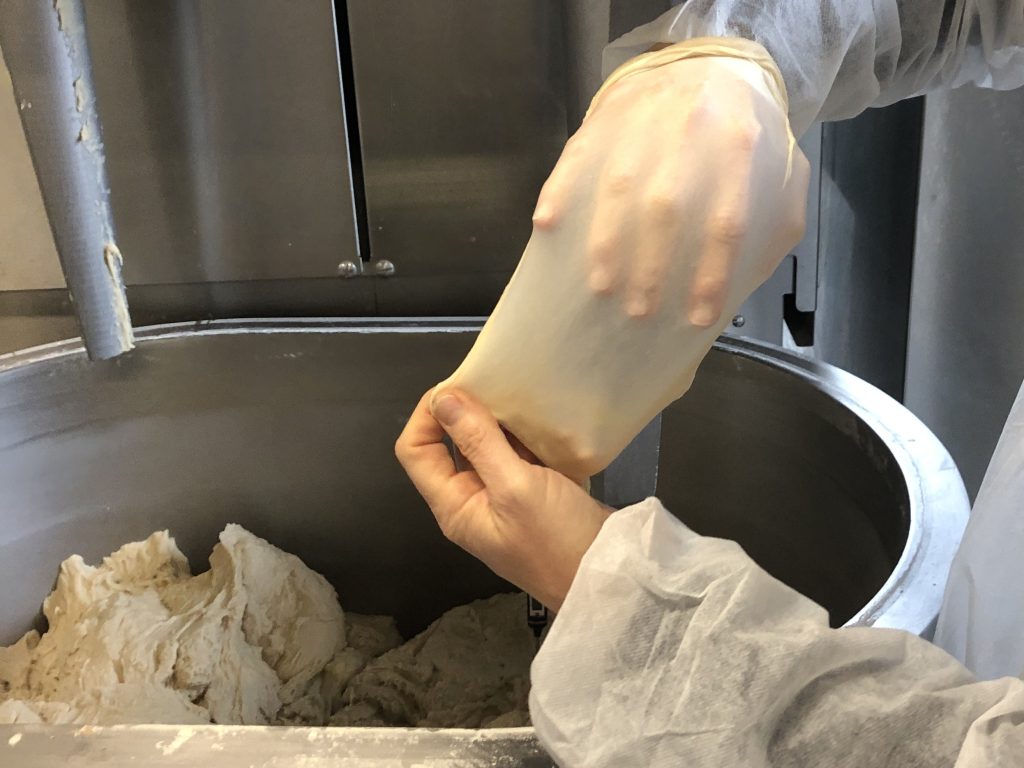
Mixing is at the heart of the rheological action: it gives the dough its “strength” by building the gluten network and provides elasticity, tenacity, and the ability to retain fermentation gases (for more information, see our article on the industrial bread-making process).
- Under-mixing or insufficient mixing results in weaker doughs with lower extensibility.
- Over-mixing or intensive mixing develops a stronger, smoother dough, but also one that can become more sensitive and less tolerant.
=> In practice, things are not always so clear-cut; it is all about delicate balances!
Temperature
With identical recipes and mixing conditions, a warm dough will be less firm and more sticky than a cold dough. Conversely, an overly cold dough may become too stiff.
Dough temperature is influenced by several factors:
- ambient room temperature
- ingredient temperatures
- mixing water temperature
- heat generated during mixing
Controlling temperature consistency is a key factor in process stability in bakery production (for more information, see our article on dough temperature control).
Our point of view
How does this framework change the way a process is designed? Approaching a bakery, viennoiserie and pastry project solely through a “products / machines” perspective often leads to production lines that underestimate dough consistency challenges.
By placing dough rheology at the centre of the design approach, it becomes possible to:
- anticipate constraints linked to sticky doughs
- optimise the flowability and transfer of difficult doughs
- prevent overmixing phenomena that can degrade product quality
Starting a bakery, viennoiserie and pastry project with the assumption that only the mixing stage influences dough rheology leads to focusing on just part of the overall challenges. On the contrary, it is essential to:
- consider the impact of temperature—whether of ingredients, mixing water or production rooms—as a key factor in the manufacturing process
- adapt solutions accordingly to local climatic conditions: France, the Middle East, Eastern Europe, etc.
- adjust resting, fermentation and cooling times and conditions based on dough behaviour
- anticipate the limitations of mechanisation and transfer systems
Approaching bakery projects with this “dough grammar” is also a powerful and practical way to create a common language between engineering, production, R&D and quality teams, and to frame specifications before entering equipment discussions.
Presentation of MERAND

Recognized by artisan bakers and a preferred supplier to numerous retail chains, MERAND is a family-owned company that designs and manufactures robust, scalable and easy-to-maintain machines.
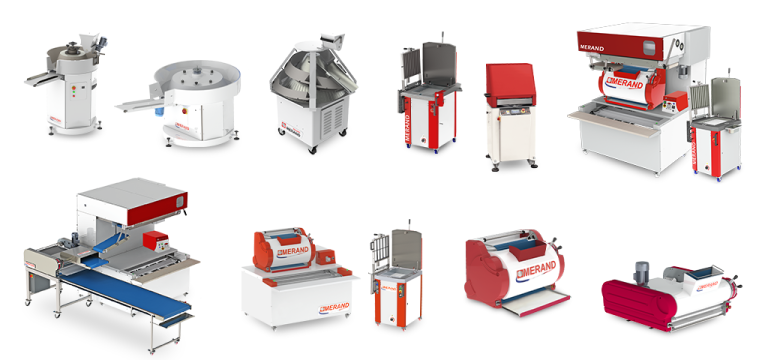
The company has developed a complete range of moulders, dividers, rounders, intermediate proofers and automatic production lines designed to meet all types of production requirements. Present throughout France thanks to its extensive distributor network, the company generates more than 60% of its turnover from exports through its reseller network, with production lines installed notably in Russia, the United States and Thailand, further confirming its international reach.
A few key figures about MERAND:
- Founded: 1954
- Workforce: 30 employees (including 5 dedicated to R&D)
- Location: Brécé, Brittany, France
- Revenue: €5.8 million (2025)
- Baking Lab: 250 m²
- Sales volume: more than 600 machines installed worldwide each year
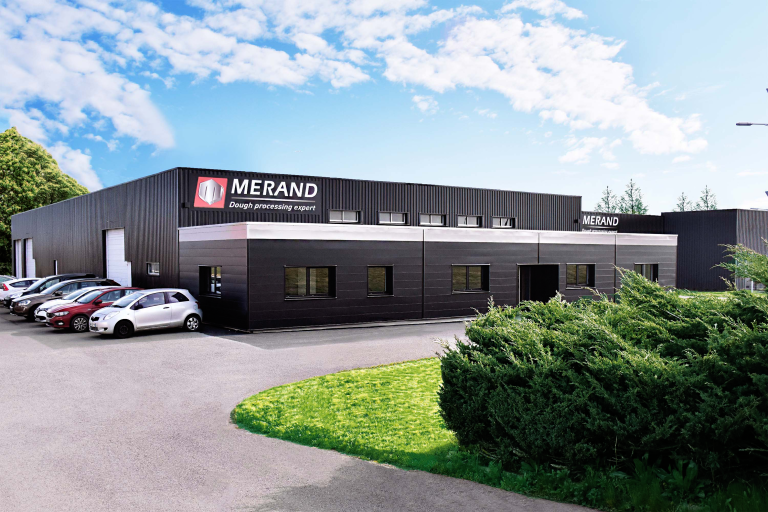
MERAND has established itself as a strong player in the bakery, viennoiserie and pastry market thanks to its presence across multiple business segments and its ability to diversify. This positioning enables the company to meet a wide range of customer needs and production requirements:
- Artisan bakeries
- Bakery chains
- Retail supermarkets and hypermarkets
- Industrial bakeries
- HORECA sector
Technical focus on MERAND solutions
1. Artisan & HORECA Range
MERAND offers a complete range of bakery equipment dedicated to artisan bakers: mixers, hydraulic dividers, divider-rounders, rounders, intermediate proofers, as well as automatic lines integrating volumetric dividers.
MERAND equipment is widely installed in numerous bakeries, demonstrating its strong recognition in the field.
These machines stand out for their reliability, robustness and ease of use, but above all for their gentle dough handling. Every aspect has been designed to process dough delicately, without compromising product quality, while adapting to the baker’s methods and recipes.
Good to know: As part of occupational risk prevention programs, certain equipment may qualify for subsidies from the French National Health Insurance Fund (CNAM), with financial support covering up to 70% of the investment.
2. Automatic Production Lines
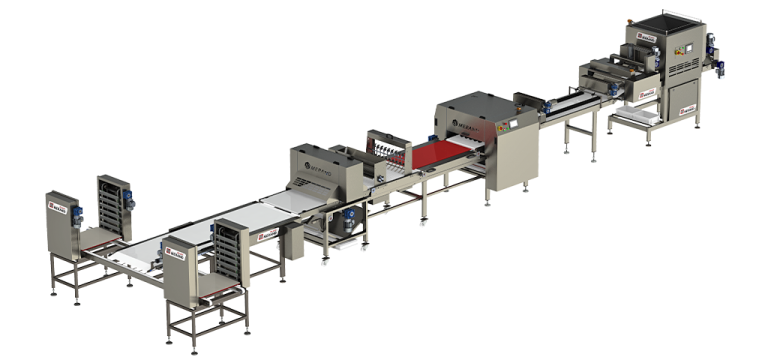
MERAND offers a wide range of production lines designed for all types of doughs, developed according to the same philosophy as its artisan equipment range: simplicity, robustness and efficiency.
Each solution is designed with particular attention to ergonomics and ease of cleaning, ensuring both user comfort and optimal hygiene in daily operations.
This production line range includes the following models:
- FlexiLine: Production of traditional baguettes and baguette slices, up to 2,500 pcs/h
- Rolling Line: Production of small and rounded products, up to 4,500 pcs/h
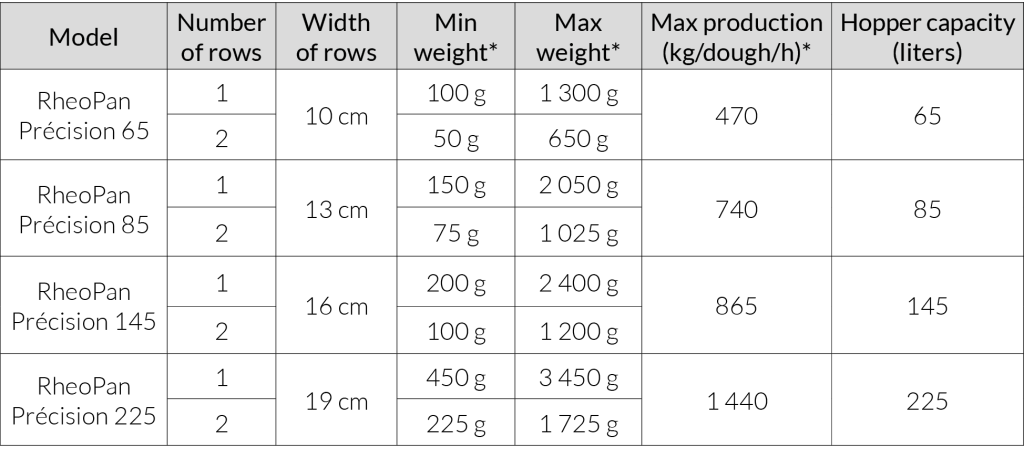
- RheoPan Line: Production of a wide range of breads, from high-hydration to firm doughs, up to 1440 kg/h
- Easy Line: Production of shaped products directly, without a resting stage, up to 2,500 pcs/h
Kraft Line: Production of large loaves, up to 1,800 pcs/h
3. Scoring Modules
The MERAND scoring range includes automatic scoring modules available as standalone units, integrated into continuous production lines, or combined with a rack unloading system.
These modules can perform straight or angled cuts with high consistency, ensuring uniform product appearance. Easy to operate, they also allow non-skilled operators to achieve precise and consistent scoring results.
Technical focus on the RheoPan Line by MERAND
The operating principle of the RheoPan Line is based on its continuous dual-weighing system, which provides excellent weight consistency. All dough piece weights are automatically checked on an integrated weighing conveyor.
In the event of a weight deviation, the RheoPan Line automatically and continuously recalibrates itself to adjust the cutting process and maintain the target weight setpoint.
Flexibility
The key strength of the RheoPan Line lies in its ability to process a wide variety of doughs: from firm bun-type doughs to highly elastic and sticky panettone doughs.
This versatility is achieved through several spray nozzles positioned at strategic locations on the machine (dough receiving hopper, weighing conveyor, etc.), continuously moistening the areas in contact with the dough. Another setting allows the dough band to be split into two lanes, making it easy to produce small products such as ciabattas or rustic rolls.
Modularity
Depending on the installed modules (rounder, moulder, intermediate proofer, etc.), the line can produce a very wide variety of products: rectangular or square dough pieces such as ciabattas, round products ranging from country breads to panettones, and shaped or elongated breads such as baguettes.
Flexibility is also present at the dough feeding stage in the hopper, which can be configured for manual loading, bin hoists, or bowl lifts with an overhead hopper.
Ergonomics and hygiene
MERAND places particular emphasis on the overall ergonomics of the line, through an intuitive HMI interface that allows operators to adjust settings in real time. Operator accessibility for maintenance and cleaning is also improved, with most protective guards designed for tool-free removal, making disassembly quick and easy.
Conclusion
As you can see, in industrial bakery production, understanding the dough before the finished product is a key factor in designing efficient and sustainable processes. Rheology, temperature, fermentation and moulding behaviour directly influence equipment selection, production conditions and ultimately product quality.
This broader process perspective is now a real driver of industrial optimisation and a common language between all project stakeholders: client teams, suppliers, process experts, and more.
It is within this approach that MERAND supports its customers, providing robust equipment and solutions designed as closely as possible to real production conditions and dough behaviour.
Hopi Consulting supports you in this approach by offering tailor-made, independent technical assistance fully dedicated to bakery, viennoiserie and pastry projects. Discover our technical support solutions on our website.
Why not take advantage of this article to frame your next investment with a clear and structured specification, focusing on your product, your objectives and your key challenges?
This article was written by Hopi Consulting, the engineering consultancy dedicated to bakery, viennoiserie and pastry. Discover more articles on the Hopi Consulting blog dedicated to bakery, viennoiserie and pastry.